مجله حقوقی دادگستری

مجله حقوقی دادگستری

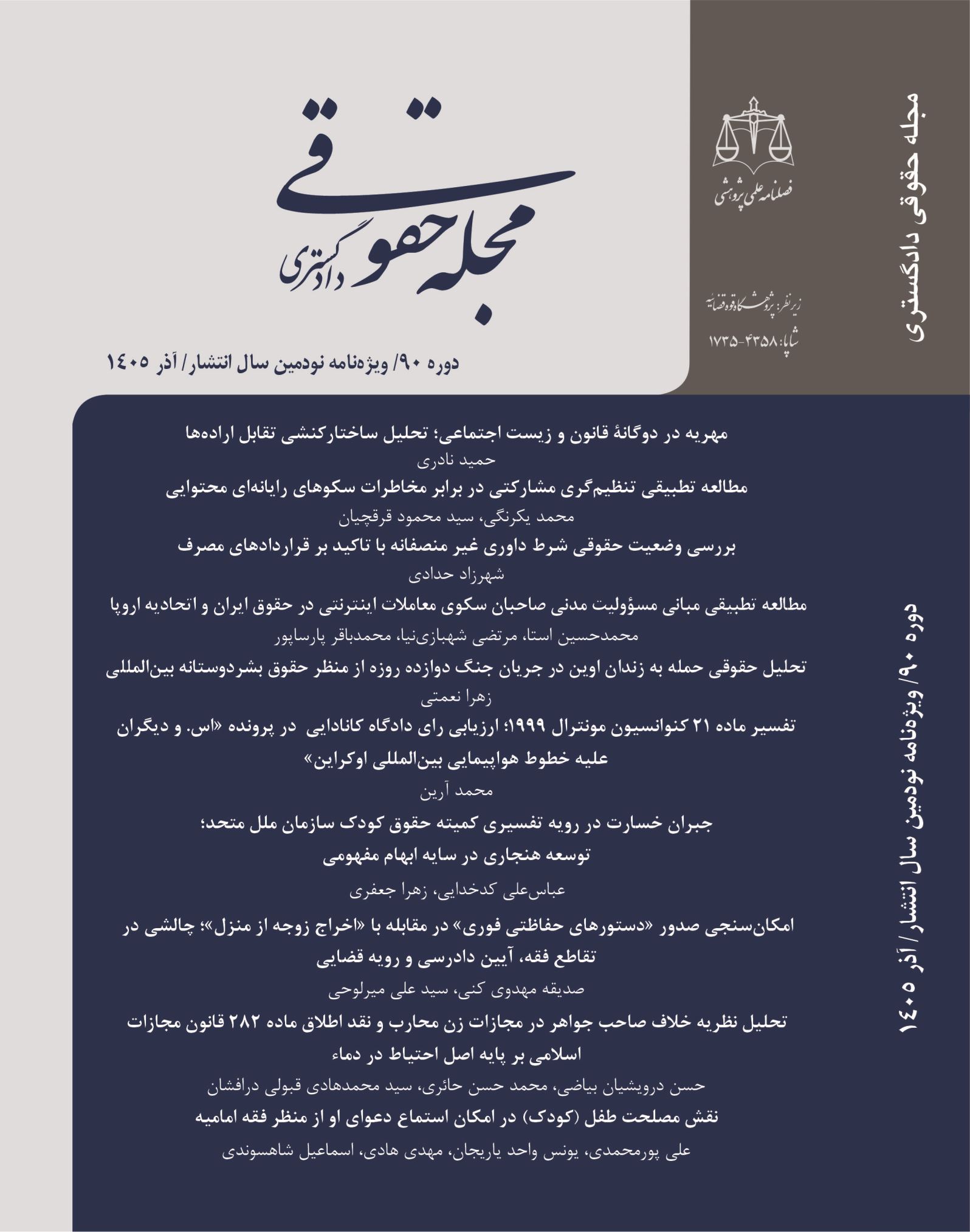
امکان‌سنجی صدور «دستورهای حفاظتی فوری» در مقابله با بزه «اخراج زوجه از منزل»؛ چالشی در تقاطع فقه، آیین دادرسی و رویه قضایی

نوع مقاله : پژوهشی

نویسندگان
1 دانشیار گروه فقه و حقوق اسلامی، دانشگاه امام صادق (ع) پردیس خواهران، تهران
2 دانشجوی دکتری فقه و حقوق،دانشگاه و مدرسه عالی شهید مطهری (ره)،تهران،ایران
10.22106/jlj.2026.2087334.6515
چکیده
خشــونت خانگی پدیده ای چندوجهی اســت که مقابله مؤثر بــا آن نیازمند مداخلات فوری و بازدارنده اســت. نظام حقوقی ایران در مواجهه با این پدیده، غالبا به ضمانت اجراهای مدنی زمان بر مانند دعوای نفقه و یا ابزارهای کیفری پسینی تکیه دارد. پژوهــش حاضر بــا روش توصیفی تحلیلی و رویکــردی انتقادی تطبیقی، در پاسخ به این پرســش که در نظام حقوقی ایران صدور دستورهای حفاظتی فوری در مقابله با بزه اخراج زوجه از منزل، با چه چالشهای حقوقی قضایی رو به روســت و الگوی مطلوب برای رفع خلأهای قانونی در این حوزه چیست، ضمن آسیب شناسی سیاست جنایی موجود، چالش های تأســیس و اجرای دستورهای حفاظتی نظیر منع ورود متهم به اقامتگاه بزه دیده یا الزام به تهیه مســکن جداگانه را بررســی می کند و نتیجــه می گیرد که رویکردها و تلاش های تقنینــی اخیر نظام قانون گذاری برای حل این معضل و جرم انگاری رفتارهایی نظیر «اخراج همســر از منزل،» به دلیل تمرکز بر مجازات های مالی محض و «فقدان ضمانت اجرای کیفری قاطع برای نقض دستورها،» خطر «بزه دیدگی ثانویه» را در پی دارد و مدل حقوق کشور فرانسه که صدور دستور را با ماهیت مدنی حمایتی و با ضمانت اجرای کیفری ســخت گیرانه تلفیق کرده است، الگوی مناسبی برای رفع خلأهای آیین دادرسی کیفری ایران به شمار می رود. همچنین به منظور توجیه مداخلات ضروری حاکمیت در حریم خانواده، بهره گیری از ظرفیت فقهی «احکام حکومتی» و قاعده «لاضرر» پیشنهاد می شود.
کلیدواژه‌ها
موضوعات

عنوان مقاله English

The Feasibility of Issuing “Urgent Protective Orders” to Counter the “Expulsion of a Wife from the Marital Home”: A Challenge at the Intersection of Islamic Jurisprudence, Civil Procedure, and Judicial Practice

نویسندگان English

sedighe mahdavikani 1
seyed ali mirlohi 2
1 Associate Professor, Department of Islamic Jurisprudence and Law, Imam Sadiq University (Women’s Campus), Tehran, Iran.
2 PhD student in Jurisprudence and Law, Shahid Motahari University and Graduate School, Tehran, Iran
چکیده English

Domestic violence is a multifaceted phenomenon whose effective prevention and response require immediate and deterrent interventions. In addressing this phenomenon, the legal system of Iran has predominantly relied on time-consuming civil remedies, such as actions for maintenance (nafaqeh), or on ex post criminal-law mechanisms. Employing a descriptive-analytical methodology and a critical comparative approach, this study examines, in response to the question of what legal and judicial challenges arise in the legal system of Iran in issuing urgent protective orders to counter the offense of expelling a wife from the marital home, and what model would be appropriate for addressing the existing legislative gaps in this feld. The study diagnoses the shortcomings of the existing criminal policy and examines the challenges involved in establishing and implementing protective orders, such as prohibiting the accused from entering the victim’s residence or requiring the provision of separate accommodation. It concludes that recent legislative approaches and efforts to address this problem and criminalize conduct such as the “expulsion of a spouse from the home,” due to their emphasis on purely fnancial penalties and the “absence of an effective criminal sanction for violations of such orders,” risk resulting in “secondary victimization.” The French legal model, which combines the issuance of protective orders of a civil-protective nature with stringent criminal sanctions, is therefore identifed as an appropriate model for addressing gaps in Iran’s criminal procedural framework. Furthermore, to provide a basis for necessary state intervention in the privacy of the family, reliance on the jurisprudential capacity of ahkame hokumati (governmental rulings) and the la Zarar (no-harm) principle is proposed

کلیدواژه‌ها English

Criminal-law Policy in the Family Domain
Criminal Procedure
Differentiated Proceedings
Domestic Violence
Protective Orders
Secondary Victimization

  • تاریخ دریافت 10 اردیبهشت 1405
  • تاریخ بازنگری 28 تیر 1405
  • تاریخ پذیرش 29 تیر 1405
  • تاریخ اولین انتشار 30 آبان 1405
  • تاریخ انتشار 01 آذر 1405