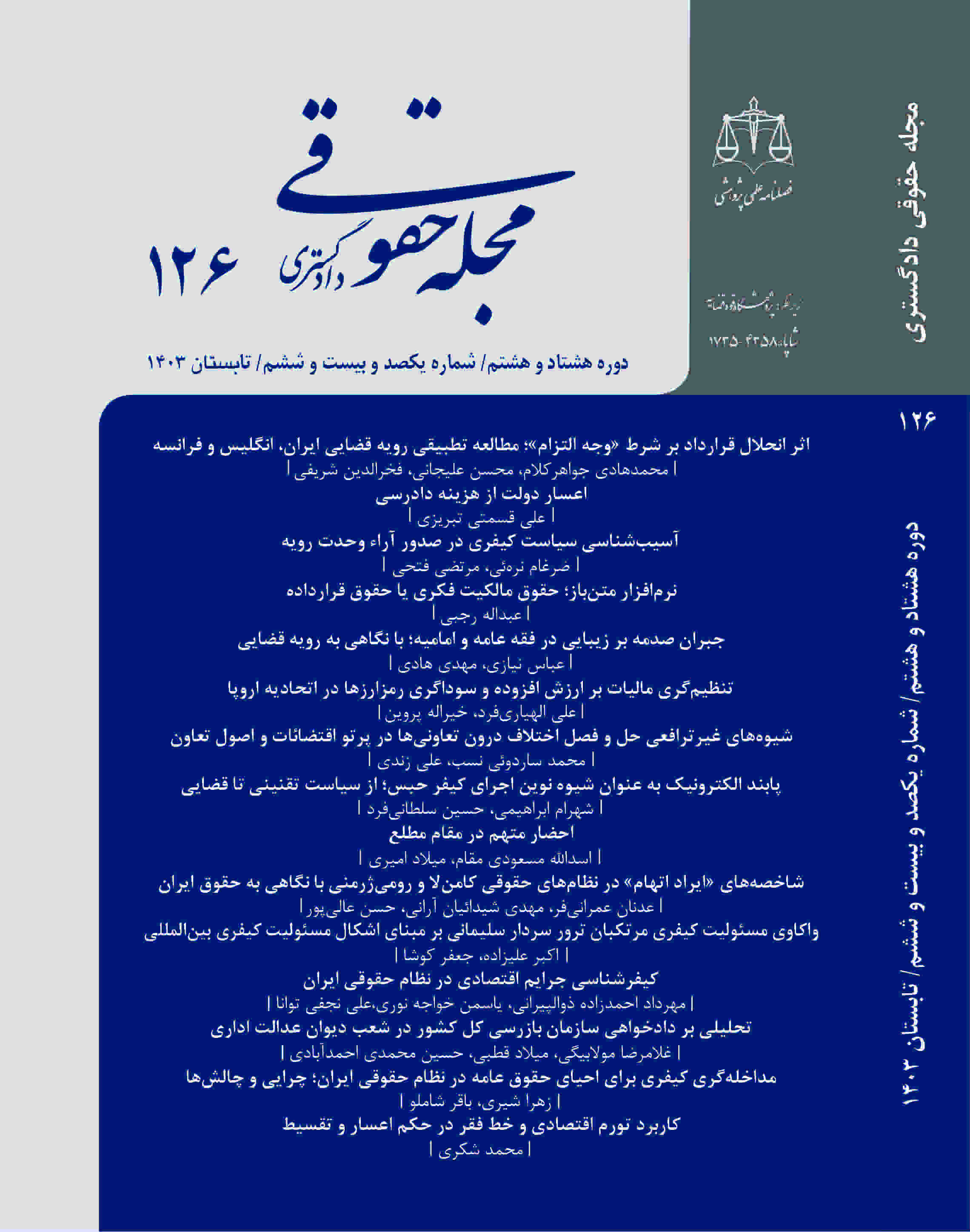
مجله حقوقی دادگستری

مجله حقوقی دادگستری

شاخصه‌های «ایراد اتهام» در نظام‌های حقوقی کامن‌لا و رومی‌ژرمنی با نگاهی به حقوق ایران

نوع مقاله : پژوهشی

نویسندگان
1 دکتری تخصصی حقوق جزا و جرم شناسی از دانشگاه تهران(دانش آموخته)
2 استادیار گروه حقوق جزا و جرم شناسی دانشکده حقوق پردیس فارابی دانشگاه تهران
3 عضو هیأت علمی پردیس فارابی دانشگاه تهران
چکیده
ایراد اتهام به عنوان اصلی‌ترین مرحله فرایند دادرسی کیفری، متاثر از نظام‌های عدالت کیفری است و شاخصه‌های آن با توجه به نظام‌ها و فرایند‌های عدالت کیفری متفاوت است. پژوهش حاضر که با روش توصیفی تحلیلی تدوین یافته، با بررسی نظام‌ها و فرایندهای عدالت کیفری، نتیجه گرفته است که شاخصه‌های ایراد اتهام با توجه به نظام و فرایند حاکم دادرسی متفاوت است؛ به طوری که در نظام رومی-ژرمنی دادستان نقشی در مرحله ایراد اتهام ندارد و باید آن را جلو ببرد؛ در حالی که در نظام کامن‌لا دادستان در مواردی می‌تواند از ایراد اتهام خودداری کند. در فرایند عدالت کیفری کنترل‌مدار، هر واکنش بر خلاف نظم و امنیت با ایراد اتهام روبه‌رو است، اما در فرایندِ کرامت‌مدار، ایراد اتهام مبتنی بر نظام کفایت ادله و با احتیاط و با توجه به ظن غالب ارتکاب جرم وارد می‌شود و در فرایند ترکیبی، در جرائم با حیثیت خصوصی، ایراد اتهام با شاخصه‌های مشابه فرایند کرامت‌مدار و در جرائم با حیثیت عمومی، شاخصه‌های ایراد اتهام همانند فرایند کنترل‌مدار است. در نظام عدالت کیفری ایران، ایراد اتهام تا حد زیادی منطبق بر شاخصه‌های کنترل‌مدار است و دادستان در مرحله ایراد اتهام اختیاری ندارد.
کلیدواژه‌ها
موضوعات

عنوان مقاله English

Analyzing the effectiveness of the "accusation objection" indicators in the Common Law and Roman-Germanic legal systems with a view to Iranian law

نویسندگان English

adnan omrani far 1
mehdi sheydaeiyan 2
Hassan Alipour 3
1 Doctorate in criminal law and criminology from Tehran University
2 Assistant Professor, Department of Criminal Law and Criminology, Faculty of Law, Farabi Campus, Tehra University
3 Member of the Faculty of Farabi Campus of Tehran University
چکیده English

Accusation, as the main stage of the criminal process, which can be considered as the gateway to criminal justice, is affected by criminal justice systems in such a way that, contrary to most beliefs, that the indicators of accusation are the same in all legal systems, its indicators according to the systems and processes Criminal justice is different, and as a result, this influence plays an important role in the beginning and subsequent stages of the criminal process. The current research, which was compiled with descriptive-analytical method after examining the criminal justice systems and processes, has concluded: the indicators of objection to the accusation are different according to the system and the governing process of the proceedings, so that in the Roman-Germanic system, the prosecutor has no role in the objection stage. There is no charge and he must proceed with it, while in the common law system, the prosecutor can refuse to charge in some cases. In the control-oriented criminal justice process, any reaction against order and security is faced with an accusation, while in the dignity-oriented process, the accusation is based on the sufficiency of evidence system and is introduced with caution and considering the prevailing suspicion of committing a crime. Finally, in the combined process, in crimes with private status, accusations are presented with the same indicators as in the dignity-oriented process, and in crimes with public status, including crimes against sovereignty, the indicators of accusations are similar to the control-oriented process. The approach of Iran's criminal justice system in this regard is such that the prosecutor has no authority in the accusation stage and must initiate the criminal process, and in the end, the accusation in Iranian law is considered to be in line with the indicators of the control system to a large extent.

کلیدواژه‌ها English

accusation
criminal justice system
prosecutor
common law system
Roman-Germanic system
accused
  • منابع

    الف: فارسی

    • بوریکان، ژاک و سیمون، آن ماری،(1389)، آیین دادرسی کیفری، ترجمه عباس تدین، چاپ اول، تهران؛ انتشارات خرسندی
    • داوید رنه (1390)نظام های بزرگ حقوقی معاصر؛  ترجمه و تحقیق حسین صفایی، محمّد ، آشوری، عزت الله عراقی، چاپ سوم، تهران؛ انتشارات مرکز نشر دانشگاهی.

    §       دهخدا، علی اکبر.(1377). لغت نامه،چاپ پنجم، جلد دوازدهم، تهران؛انتشارات دانشگاه تهران.

    §       شیداییان و همکاران، مهدی.(1400). تحلیل نسبت مصلحت‌سنجی تعقیب کیفری با نظم عمومی و امنیت اجتماعی. مطالعات و تحقیقات اجتماعی در ایران، سال دهم، شمارۀ 1- 79-116.

    §       شیداییان، مهدی و اسحاقی، سید جعفر،(1399) جلوههای مصلحت عمومی در آیین دادرسی کیفری و چالش آن با حقوق فردی، فصلنامه دیدگاه های حقوق قضایی، دورۀ 25، شمارۀ 89، 101- 120.

    §       عمرانی فر، عدنان و شیدائیان، مهدی(1402). ایراد اتهام به افراد؛ علل و پیامدها از منظر مبانی قرآنی و روایی، فصلنامه مطالعات قرآنی جیرفت، دوره 4 (شماره 56)، 52- 76.

    §       عمرانی فر، عدنان و همکاران (1399). جایگاه شُعبه مقدماتی در دیوان بین الملل کیفری و اِمکان سنجی پیش بینی آن در حقوقِ ایران. پژوهشنامه حقوق تطبیقی، دوره 4 (شماره 2)، 162-179.

    §       کوشکی، غلامحسن. (1389). جایگزین های تعقیب دعوای عمومی در نظام دادرسی کیفری ایران و فرانسه. حقوق و سیاست، دوره 12، (شماره 29)، 327-350.

    §       معین، محمد،(1387). فرهنگ فارسی معین، چاپ سوم، تهران:  انتشارات فرهنگ نما.

    • نجفی ابرندآبادی، علی حسین و رستمی، هادی،(1391). رویکرد سزاگر به کیفر در نظریۀ لیبرالیسم، فصلنامه تحقیقات حقوقی، شمارۀ 10، 34-55.


    ب: انگلیسی

    • Ambos, Kai. (2003). International criminal procedure, adversarial, inquisitorial or mixed?; International Criminal Law Review,vol 3
    • Brown, A. (1998),Police Governance in England and Wales. First published. Great Britain: Cavendish Publishing Limited.
    • Cole, George F. & Christopher E. Smith,(1998). The American System of criminal justice, Wadsworth Publishing Company, 8th ed
    • Cole, George F. & Mary G. Gertz,( 1997),The criminal justice system: Politics and policies, 7th ed., West/Wadsworth Publication,
    • Defranica, Cristian (2001), Due Process in international criminal courts, why procedure matters? Virginia law Review, Vol. 87.
    • Garner, Bryan A.( 2009). Black's Law Dictionary, discretion (4), 9 edition.west
    • Goldstein, (1960).The State and the Accused: Balance of Advantage in Criminal Procedure, 69 YA.z L.J. 1149.
    • Hutchings, P. (2001). The Criminal Subject in Law, Literature and Aesthetics. New York: Routledge.
    • Jorg, N; Field, S & Brants, C. (1995). Are Inquisitorial and Adversarial systems converging? In Fennell, P et al . (eds). Criminal Justice in Europe: A Comparative Study,Oxford, Clarendon Press
    • Ma, Yue. (2002). Prosecutorial Discretion and Plea Bargaining in the United States, France, Germany, and Italy, A Comparative Perspective,International Criminal Justice Review, Vol. 12.
    • McLaughlin, Eugene & John Muncie, (2001).The Sage Dictionary of criminology, Sage Publication, 1st published.
    • Packer, Herbert, Two models of criminal process, Stanford University Press, 1964.
    • Pavlich, George. (2018). ‘The violent rhetoric of accusation: Cicero and the Marcus Ameleus Scaurus case’. In Joshua Nichols and Amy Swiffen (eds), Legal Violence and the Limits of the Law. Abingdon: Routledge, 30–49.
    • Reichel L. Philip. (1999). Criminals Justices Systems, A Topical Approach Sec.Ed. Pearson
    • Remington, The Law Relating to,(1996) On the Street" Detentio n , Questioning and Frisking of Suspected Persons and Police Arrest Priileges inGeneral, 51 3. Gnns. L., C & P.S. 386 .
    • Safferling, Christoph J.M (2001).Towards an international criminal procedure, Oxford university Press
    • Worrall, John L (2008). Prosecution in America A Historical and Comparative Account, in: Worrall, John L. & M. Elaine NugentBorakove, The Changing Role of the American Prosecutor, Albany: State University of New York Press
    • Wyngaert. Van. Den. (1993). Criminal Procedure Systems in the European Community, Van Den Wyngaert, Butterworths, London, Brussels, Dublin, Edinburgh.
دوره 88، شماره 126
تابستان 1403
صفحه 249-272

  • تاریخ دریافت 16 شهریور 1402
  • تاریخ بازنگری 31 اردیبهشت 1403
  • تاریخ پذیرش 29 خرداد 1403
  • تاریخ اولین انتشار 01 شهریور 1403
  • تاریخ انتشار 01 شهریور 1403